

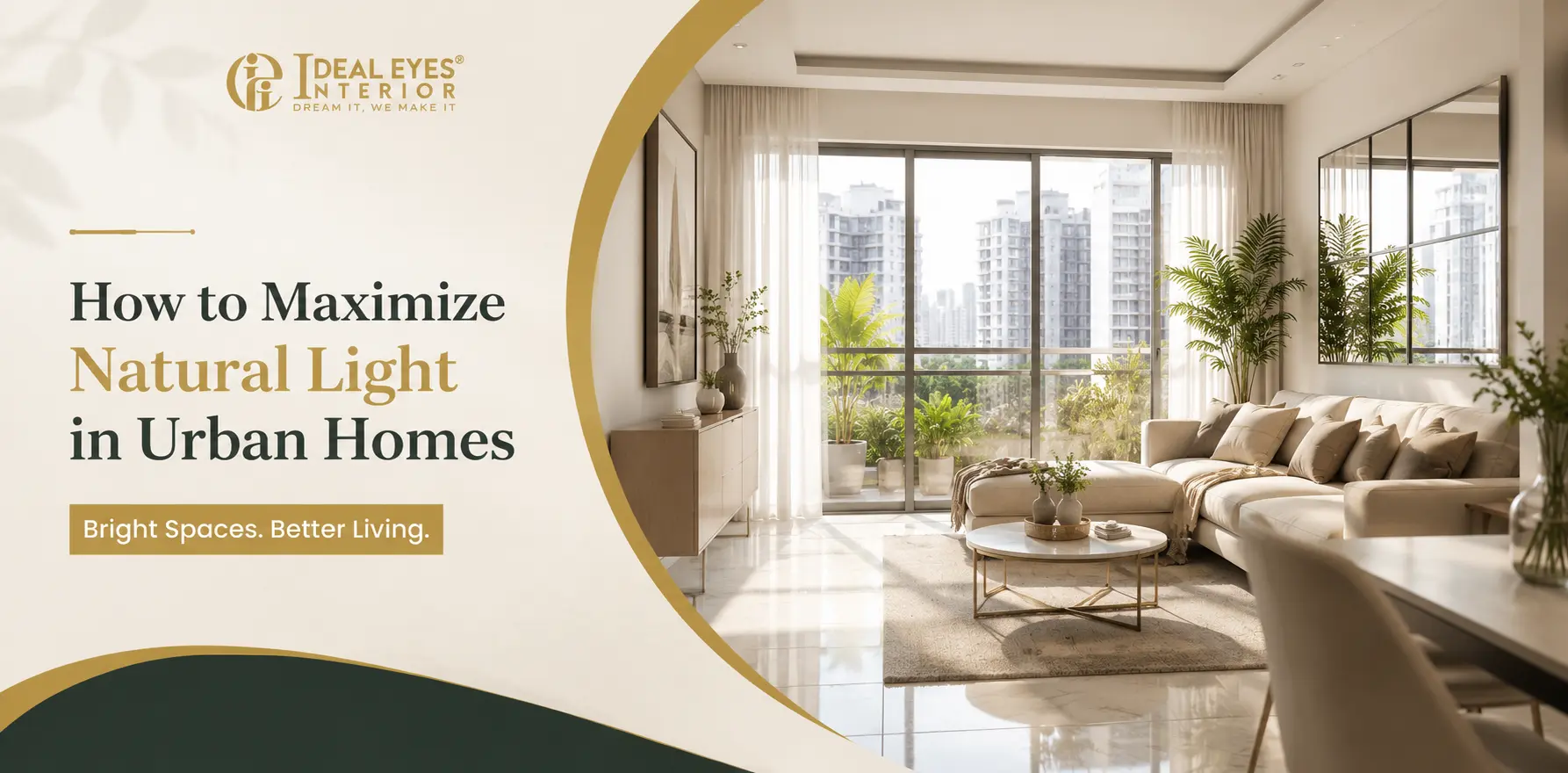
Natural light is one of the most valuable elements in residential interior design. In modern urban homes, where space is often limited and neighboring buildings can restrict sunlight, maximizing natural light has become a key design priority.
A bright, well-lit home not only looks more spacious but also contributes to comfort, productivity, and overall well-being. Whether you live in a compact apartment or a large city residence, strategic interior design decisions can significantly improve the amount of daylight entering your home.
In this guide, the design experts at Ideal Eyes Interior share practical ways to maximize natural light in urban homes without compromising functionality or aesthetics.
Why Natural Light Matters in Urban Living
Natural light does much more than illuminate a room. It influences how a space feels, functions, and is perceived.
Benefits of maximizing natural light include:
- Creating a sense of openness and spaciousness
- Improving mood and mental well-being
- Reducing dependence on artificial lighting
- Enhancing the appearance of interior finishes
- Supporting a healthier indoor environment
For homeowners in densely populated cities, optimizing daylight can dramatically improve the overall living experience.
Choose Light-Friendly Interior Colors
Color selection plays a major role in how light travels through a space.
Light-colored surfaces reflect more sunlight, making rooms appear brighter and larger. Shades such as soft white, warm beige, light grey, and muted cream help distribute daylight more effectively throughout the home.
Dark wall colors tend to absorb light, which may make smaller urban spaces feel more enclosed.
For homeowners seeking a modern and timeless aesthetic, neutral color palettes remain one of the most effective strategies for maximizing natural light.
Optimize Window Treatments
Many urban homes unintentionally block valuable daylight with heavy curtains and dark window coverings.
Instead, consider:
- Sheer curtains
- Lightweight fabrics
- Roller blinds
- Layered window treatments
These options allow natural light to enter while maintaining privacy.
When selecting window treatments, the goal should be to control glare without significantly reducing daylight penetration.
Use Mirrors to Reflect Light
Mirrors are among the simplest and most effective tools for enhancing natural light.
When strategically positioned opposite or adjacent to windows, mirrors reflect daylight deeper into the room and create the illusion of a larger space.
This technique is particularly useful in:
- Small apartments
- Narrow living rooms
- Compact bedrooms
- Urban studio spaces
Large mirrors can transform darker corners into visually brighter areas without structural modifications.
Consider Open Space Planning
Interior layouts have a direct impact on how daylight moves through a home.
Open-plan designs allow natural light to travel more freely between spaces. Reducing unnecessary partitions and maintaining visual continuity can significantly improve brightness levels.
Modern urban homes often benefit from:
- Open living and dining areas
- Flexible multifunctional spaces
- Minimal visual barriers
Professional space planning ensures that daylight reaches as many functional areas as possible.
Incorporate Glass Elements
Solid walls can obstruct natural light, especially in compact homes.
Glass partitions provide an effective alternative while maintaining privacy and spatial definition.
Popular applications include:
- Home office enclosures
- Kitchen partitions
- Room dividers
- Staircase balustrades
Glass elements help distribute daylight throughout the interior while preserving an open and contemporary appearance.
Select Reflective Interior Materials
Material selection influences how effectively light is distributed within a space.
Reflective surfaces can enhance brightness by bouncing daylight throughout the room.
Consider incorporating:
- Gloss-finish cabinetry
- Polished stone surfaces
- Glass accents
- Light-toned flooring
- Metallic decorative details
The objective is not excessive shine but balanced reflection that contributes to a brighter environment.
Avoid Common Design Mistakes
Many homeowners unknowingly reduce natural light through poor design choices.
Common mistakes include:
- Placing large furniture directly in front of windows
- Using dark, bulky curtains
- Overcrowding rooms with decorative items
- Installing solid partitions unnecessarily
- Choosing overly dark color palettes
Addressing these issues often produces immediate improvements in perceived brightness.
Maximize Balcony and Exterior Openings
In urban apartments, balconies often serve as an important source of daylight.
To maximize light entry:
- Keep balcony spaces uncluttered
- Avoid tall objects that block sunlight
- Use transparent or minimal railing designs when possible
- Maintain clean glass surfaces
Small adjustments can make a noticeable difference in how much daylight reaches interior spaces.
The Role of Professional Interior Design
Every home receives sunlight differently based on orientation, surrounding structures, window placement, and layout.
Professional interior designers evaluate these factors to develop customized solutions that improve daylight performance while supporting functionality and aesthetics.
At Ideal Eyes Interior, natural light optimization is integrated into the design process from the earliest planning stages. Through thoughtful space planning, material selection, and layout strategies, homeowners can create brighter and more comfortable living environments tailored to modern urban lifestyles.
Conclusion
Maximizing natural light in urban homes is not simply about adding more windows. It requires a thoughtful combination of space planning, color selection, material choices, window treatments, and furniture placement.
By making informed design decisions, homeowners can transform darker interiors into bright, welcoming spaces that feel larger, healthier, and more enjoyable to live in.
Whether you are renovating an apartment or designing a new home, prioritizing natural light can significantly enhance both the functionality and beauty of your interior spaces.
Frequently Asked Questions:
Q. What is the best way to increase natural light in a small apartment?
Using light-colored walls, mirrors, sheer curtains, and open layouts are among the most effective ways to increase natural light in smaller urban homes.
Q. Can mirrors really make a room brighter?
Yes. Mirrors reflect daylight and distribute it throughout a space, making rooms appear brighter and more spacious.
Q. Which colors reflect natural light the best?
Soft white, cream, beige, and light grey are excellent choices because they reflect a higher percentage of available daylight.
Q. Do glass partitions help improve natural light?
Absolutely. Glass partitions allow daylight to flow between rooms while maintaining separation and functionality.
Q. Why is natural light important in interior design?
Natural light improves visual comfort, enhances mood, reduces energy consumption, and creates a more open and inviting living environment.